Bangkok Travel Guide
BKK to DMK: Transferring Between Bangkok Airports
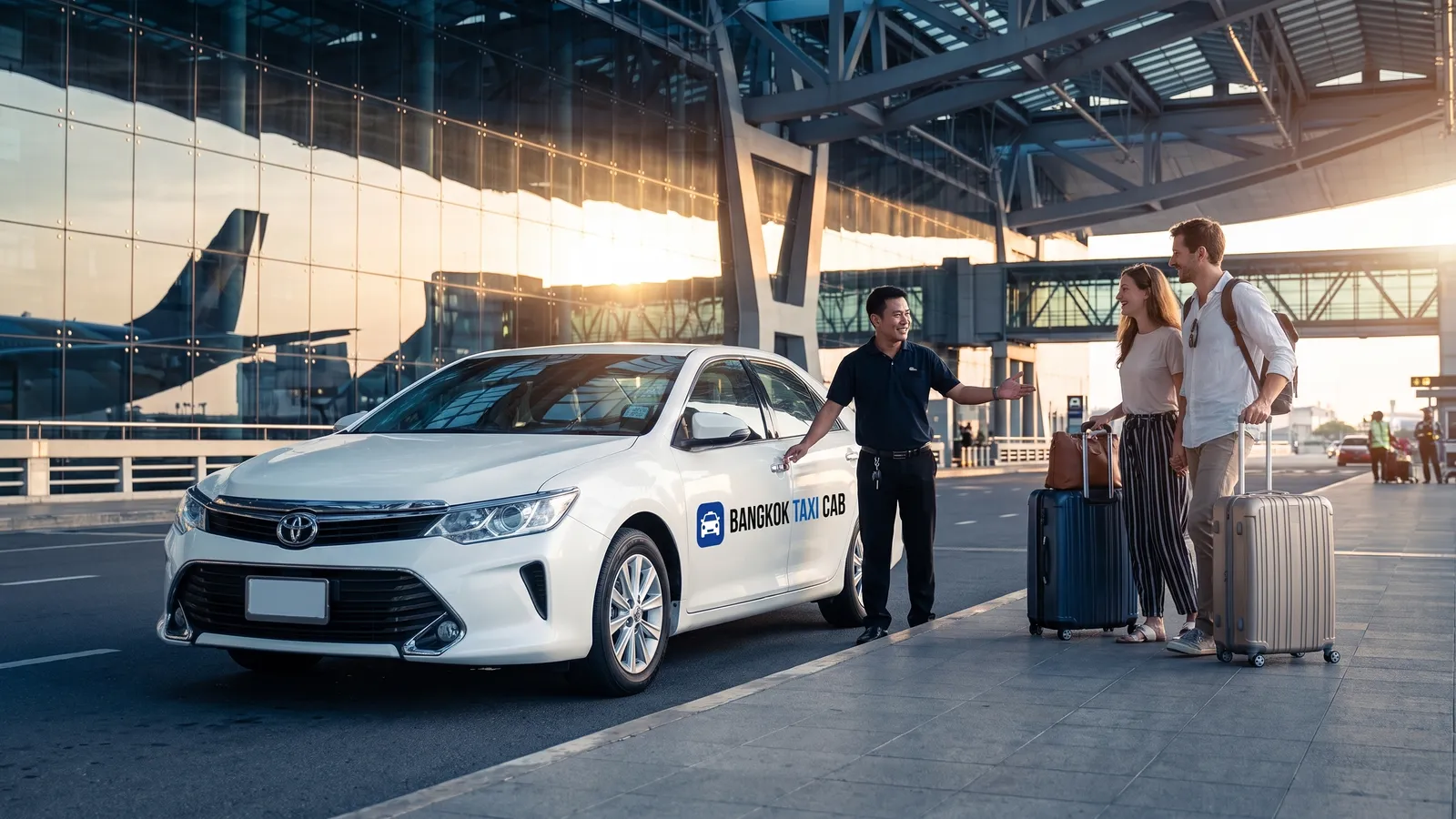
Bangkok has two busy international airports, and they are on opposite sides of the city: Suvarnabhumi (BKK) to the east, Don Mueang (DMK) to the north. Full-service and long-haul carriers mostly use BKK; low-cost airlines like AirAsia, Nok Air and Thai Lion cluster at DMK. So if you booked two flights on separate tickets — say a long-haul into BKK and a cheap regional hop out of DMK — nobody moves you between them. That transfer is entirely on you, and getting it wrong can cost you a flight.
Here’s exactly what the transfer involves, how long to actually allow, and the honest trade-offs between your options. For the wider picture, see our complete Bangkok airport transfer guide.
The drive: distance and realistic time
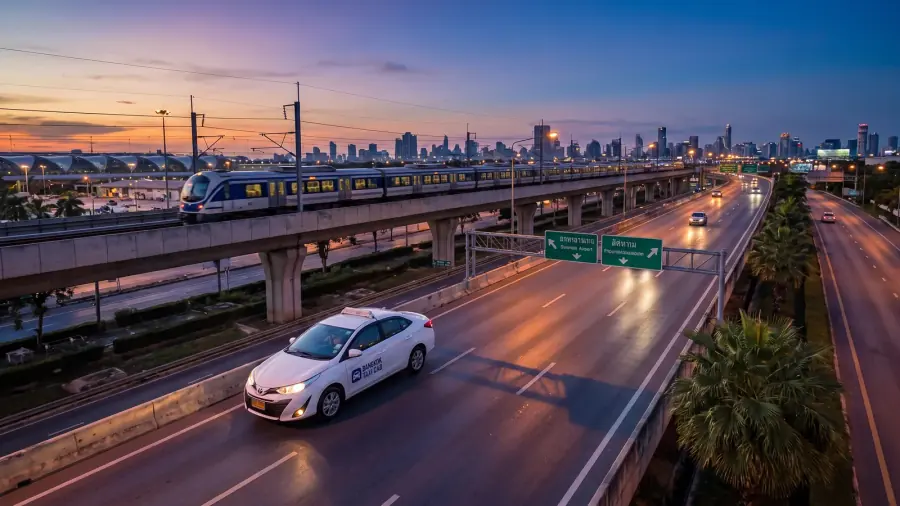
The two airports are roughly 35–45 km apart, depending on the exact route. Most of it runs on tollways and the outer ring road, so in ideal conditions it’s a genuinely quick trip. In real Bangkok conditions, it often is not.
| Time of day | Realistic drive time | Notes |
|---|---|---|
| Late night (22:00–05:00) | 30–40 min | Clearest roads, tolls quiet |
| Mid-morning / midday | 45–60 min | Steady, occasional slow patches |
| Rush hour (07:00–09:30, 16:00–19:30) | 60–90 min+ | Heavy; expressway can crawl |
| Rainy-season downpour | Add 20–30 min | Flooding and slowdowns anytime |
The single most important planning rule: allow 60–90 minutes for the drive itself, not the 30-minute best case. Bangkok traffic is unpredictable, and an accident on the expressway can freeze it with no warning. Budget for the bad day, not the good one.
Your three ways across
1. Free airport shuttle bus (conditions apply)
There is a free shuttle bus that runs directly between BKK and DMK. It’s a real service and it’s genuinely free — but there’s a firm condition: it is for transferring passengers only, and you must show a connecting flight boarding pass or e-ticket to board. Staff do check. If you can’t prove an onward flight, you’ll be sent to the paid options.
The shuttle is comfortable enough, but it is timetabled (roughly every 30 minutes to an hour, with thinner coverage late at night), it makes you wait for a departure, and it drops you at the terminal to then re-check-in and clear security. It’s a good free option if your layover is generous and you travel light. It is a poor choice if you’re tight on time or hauling multiple heavy bags.
2. Public taxi
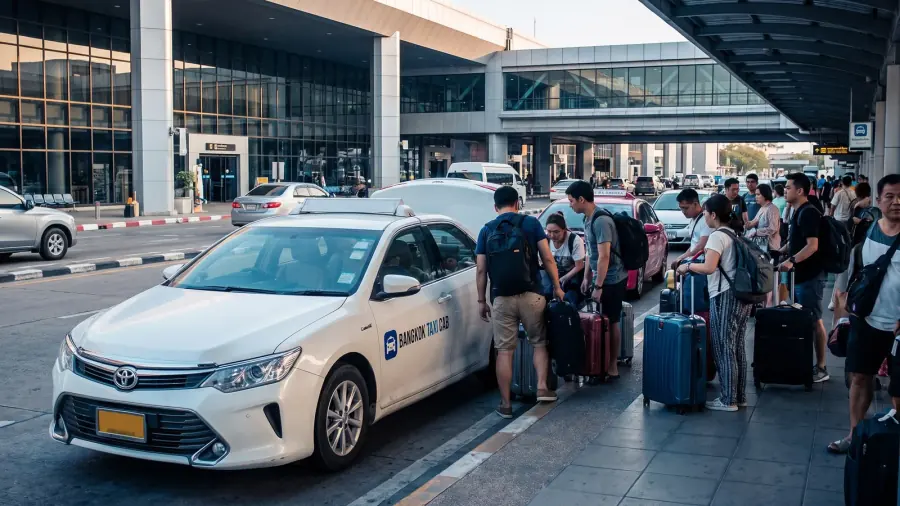
Metered taxis wait at both airports. A metered fare plus tolls is moderate, but the metered-taxi experience at airports can be inconsistent: queues at peak times, occasional drivers who’d rather negotiate a flat (often inflated) price, and no help with luggage. It works, but it’s the option with the most variables on a day when you can least afford them.
3. Pre-booked private car
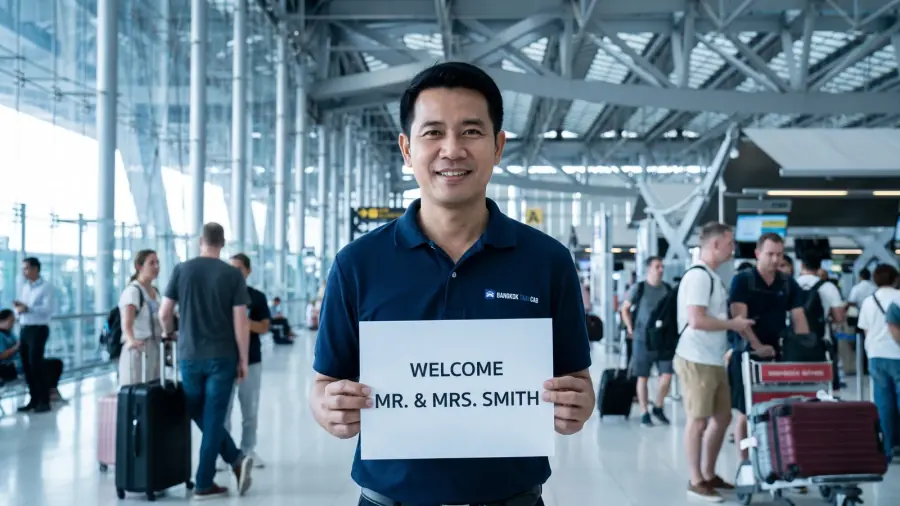
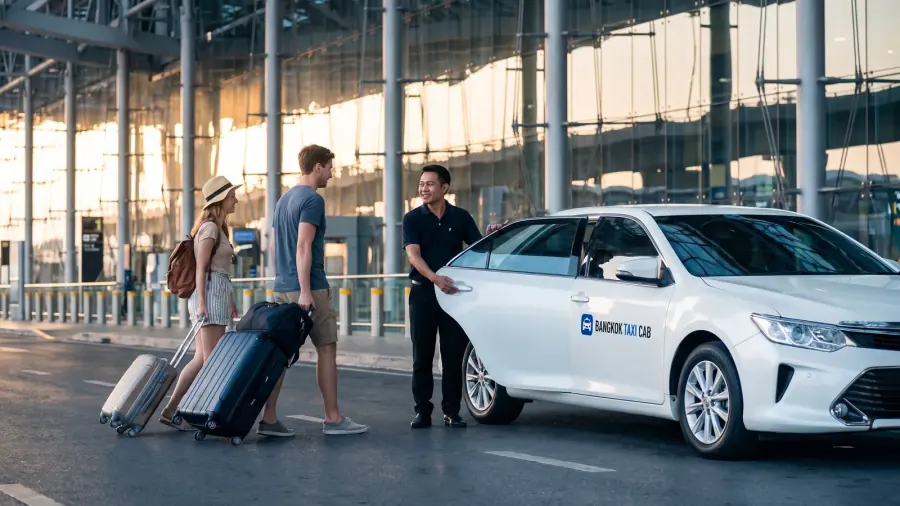
A pre-booked private car meets you inside the terminal, takes your bags, and drives you non-stop to the other airport for one fixed fare agreed in advance — no meter anxiety, no queue, no language friction. For an airport-to-airport hop the price sits at roughly the Don Mueang transfers fare tier; we don’t publish an exact number here because it depends on vehicle and time, so check the live fixed fare on the transfer pages. Start at Suvarnabhumi transfers if you’re landing at BKK, or Don Mueang transfers if you’re landing at DMK.
For most connecting travellers with real luggage and a real deadline, this is the one that removes the stress: a professional driver watching the traffic and one less thing to organise.
How much layover do you actually need?
This is where people get caught out. Because the two flights are on separate tickets, if you miss the second one, it is simply gone — no protection, no rebooking, no compensation. So build in real margin.
A safe minimum end-to-end, counting from your first flight’s scheduled landing to your second flight’s departure:
- Clear the first flight — deplane, immigration (can be 30–60 min at BKK on a busy arrival), collect checked bags: allow 60–90 min.
- The airport-to-airport drive: allow 60–90 min.
- Check in and clear security at the second airport — low-cost check-in desks often close 45–60 min before departure: allow 90 min before that cutoff.
Add those up and a realistic minimum layover is around 5 hours, and 6+ hours is comfortable — more if your inbound is a long-haul prone to delay, or if either leg falls in rush hour. If you only have three hours between two separately-ticketed flights on opposite sides of Bangkok, treat that as high-risk.
Luggage: there’s no through-check
Worth stating plainly: because the tickets are separate, your bags are not checked through. You collect every checked bag at the first airport, carry it across the city, and check in again from scratch at the second. There is also no left-luggage transfer between the airports — whatever you land with, you move yourself. This is exactly why the extra hands and boot space of a private car matter on this route.
Late-night transfers
Plenty of budget flights leave DMK in the small hours, and long-haul arrivals into BKK often land late. The good news: roads are at their fastest after 22:00, so the drive is quick. The catch: the free shuttle thins out or effectively stops overnight, metered-taxi queues can be sparse or picky, and a solo late-night arrival in an unfamiliar city is when you least want to be haggling at a rank. A pre-booked car that’s already waiting with your name is worth most at exactly this hour.
Quick sample timeline
- 14:00 — Long-haul lands at Suvarnabhumi (scheduled)
- 14:20–15:40 — Immigration and baggage claim
- 15:45 — Meet driver, load bags, depart BKK
- 16:30–17:00 — Arrive Don Mueang (allowing for late-afternoon traffic)
- 17:00 — Check in and clear security
- 19:30 — DMK departure — a sensible ~5.5-hour buffer
Two airports, two tickets, one city in between. Get the timing honest and the drive booked, and the transfer is routine. Compare the airports themselves in Suvarnabhumi or Don Mueang?, and when you’re ready to lock in the road leg, check the fixed fare on our Suvarnabhumi transfers and Don Mueang transfers pages.