Bangkok Travel Guide
Bangkok to Kanchanaburi: River Kwai Transfer Guide
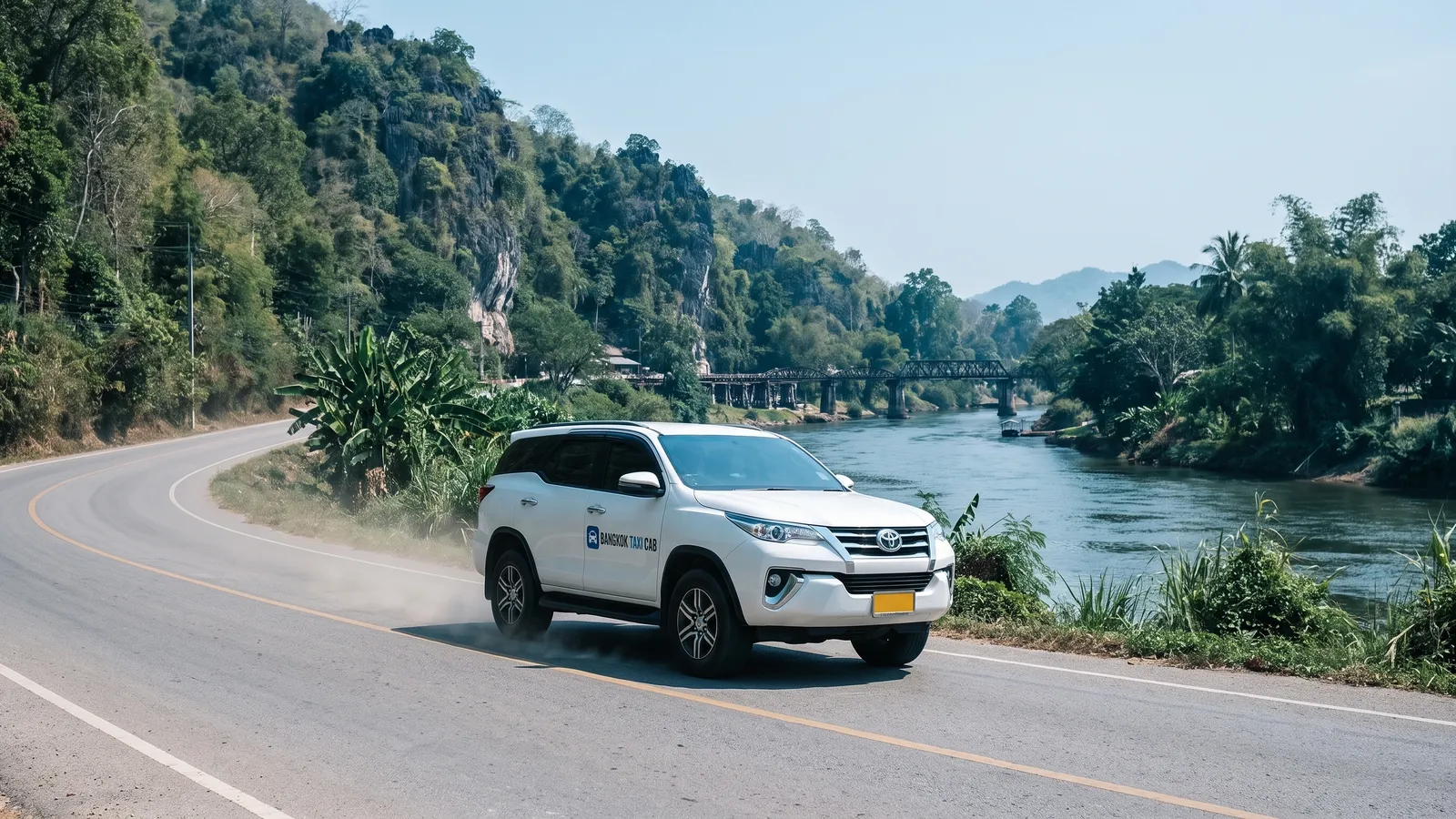
Kanchanaburi sits about 130 km west of Bangkok, roughly a two-hour drive across the flat central plains toward the Myanmar border. It is one of the most rewarding day trips or overnight escapes from the capital: a place of real beauty — limestone hills, the wide River Kwai, seven-tiered waterfalls — layered over some of the most sombre history in Southeast Asia. Getting the balance right, seeing the sights while treating the wartime memory with the respect it deserves, starts with how you travel there.
Why Kanchanaburi is worth the trip
Most visitors come for two very different reasons, and Kanchanaburi holds both at once. There is the Death Railway and the Bridge on the River Kwai, built by Allied prisoners of war and Asian labourers under Japanese occupation during the Second World War, at a terrible human cost. And there is the natural side: Erawan National Park, whose emerald waterfalls are among the finest in Thailand, plus caves, river rafts, and quiet floating guesthouses on the water.
You can see the headline sights in a single well-planned day, or slow down over a night or two. Either way, Kanchanaburi rewards travellers who arrive with time to linger rather than rush.
The WWII history — approached with respect
The Bridge on the River Kwai is the site everyone recognises, but the fuller story is told in a handful of quieter places nearby, and it is worth visiting them thoughtfully rather than treating the bridge as a photo stop.
- The Death Railway — the line built between Thailand and Burma in 1942–43. Thousands of prisoners of war and far greater numbers of conscripted Asian labourers died from disease, starvation, and forced labour. A short stretch is still in use today.
- Hellfire Pass — a cutting hacked through solid rock by hand, with a moving memorial museum and a walking trail. It is the most affecting stop for many visitors.
- The JEATH War Museum — named for the nations involved (Japan, England, Australia/America, Thailand, Holland), documenting daily life along the railway.
- The Kanchanaburi War Cemetery — the immaculately kept resting place of thousands of Allied prisoners, in the centre of town.
These are places of remembrance. Dress modestly, keep your voice low, and give the memorials the same quiet you would offer at any war grave. Many travellers find the history the most memorable part of the whole trip.
Erawan Falls and the natural side
About an hour beyond the town lies Erawan National Park, home to the famous seven-tiered Erawan Falls. A trail climbs alongside the cascades, each level pooling into clear turquoise water where you can swim (bring shoes with grip — the rocks are slick). The upper tiers take real effort to reach, so start early and carry water.
Closer to town you will also find cave temples, elephant-focused sanctuaries, and river rafthouses where you can spend a night drifting on the Kwai. If you have a second day, this is where it goes.
How to get there: train, tour, or private car
There are three sensible ways to make the trip, and the right one depends on how much you want to fit in.
| Option | Time to Kanchanaburi | Best for |
|---|---|---|
| Train | 2.5–3 h+ | Slow, scenic romance of the rails |
| Organised tour | ~2 h + fixed itinerary | Zero planning, group travel |
| Private car | ~2 h door-to-door | Combining several sites in one day |
The train — scenic but slow
The train from Bangkok is atmospheric and cheap, and part of the route runs over the historic railway itself, including the famous stretch clinging to the cliff above the river. It is a lovely experience for its own sake. The trade-off is time and rigidity: the service is slow, runs only a couple of times a day, and drops you at the station, from which you still need transport to Erawan and the outlying sites. For rail lovers with a relaxed schedule, it is a highlight. For a packed day trip, it is limiting.
Organised tours — hands-off convenience
Group day tours bundle the bridge, a museum, and often Erawan into one coach itinerary with a guide. They remove all the planning, which suits first-time visitors who are happy to move at the group’s pace. The downside is exactly that: fixed timing, shared schedules, and less room to linger at the places that move you or skip the ones that do not.
Private car — door-to-door, and you set the pace
For most travellers wanting to see Kanchanaburi properly in a day, a private car is the natural choice. One vehicle and driver collect you from your Bangkok hotel, drive the ~130 km west, and stay with you all day — the bridge in the morning, Hellfire Pass or the cemetery, then Erawan Falls, then home — with no timetables to catch and no bags to shift between legs. Because the sights are spread across a wide area, having your own car is what makes a single-day visit realistic rather than rushed.
A private transfer to Kanchanaburi starts from about ฿2,000 per car as a fixed fare — see Bangkok to Kanchanaburi private transfer for the current price and to arrange a full day with waiting time included. Because it is a per-car rate, it is often better value than per-seat tour tickets once you are two or more.
A suggested one-day itinerary
- Early start — leave Bangkok by around 7 am to beat the traffic west; arrive Kanchanaburi mid-morning.
- The Bridge on the River Kwai — walk the span before the coaches arrive.
- Hellfire Pass or the War Cemetery — set aside real time here; it is the heart of the visit.
- Lunch by the river.
- Erawan Falls — the afternoon centrepiece; climb as many tiers as your legs allow, then cool off in a pool.
- Return to Bangkok in the early evening, arriving back after dinner.
It is a full day, which is exactly why door-to-door transport matters — you spend your energy on the sights, not on connections.
When to go
The most comfortable months are the cool, dry season from November to February, when the heat is manageable and the waterfalls still flow well. March to May is very hot. The rainy season (roughly June to October) brings the waterfalls to their fullest and the hills to their greenest, though trails get slippery and afternoon downpours are common. Whenever you go, start early: the light is best, the crowds are thinnest, and the day’s driving is done in the cool of the morning.
Our honest take
Kanchanaburi packs a lot into a short distance from Bangkok — profound history and genuine natural beauty, only two hours apart from the city. To do it justice in a day you need to move between sites that are spread out, which is why a private car tends to win over the slow train or a fixed-schedule coach. Browse more ideas on our day trips & transfers from Bangkok guide, compare it with the coastal alternative in Bangkok to Hua Hin options, or send us your dates and we will quote a full Kanchanaburi day, waiting time included.